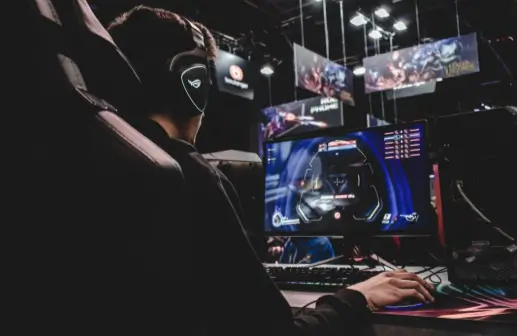

Artificial intelligence tailors challenges in real time, tracking abilities, goals, and play style to adjust difficulty and pacing. NPCs become more capable and worlds more reactive, enabling nuanced interactions and believable consequences. AI-driven storytelling supports adaptive narratives and emergent moments that respect player autonomy. Metrics on satisfaction, fairness, and replayability guide calibration, balancing immersion with transparency. The result is a player-centric loop that invites further exploration, inviting the reader to consider what comes next in these evolving systems.
How AI Personalizes Player Challenges in Real Time
Artificial intelligence personalizes player challenges in real time by continuously modeling a player’s abilities, goals, and play style, then adjusting difficulty, pacing, and content accordingly.
This approach enables adaptive difficulty through dynamic tuning, while real time personalization aligns experiences with individual preferences.
The outcome is a responsive loop: monitoring, calibrating, and delivering balanced, empowering challenges that honor freedom and encourage exploration.
Elevating NPC Smarts and Responsive Worlds
How can non-player characters (NPCs) evolve from scripted interactions to dynamic partners in a living game world? The topic examines elevating NPC smarts and responsive worlds through procedural dialogue and adaptive animations, enabling fluid, context-sensitive exchanges. This approach centers on player autonomy, reducing friction, and fostering emergent experiences by aligning NPC behavior with player intent and environmental cues.
See also: How Artificial Intelligence Improves Operational Efficiency
AI-Driven Storytelling: Adaptation, Pacing, and Emergent Moments
AI-driven storytelling reframes narrative as a responsive system rather than a fixed script. It analyzes player choices to shape adaptive pacing and emergent moments, prioritizing user agency. The approach supports character driven narratives within dynamic worlds, aligning tension with intent and curiosity. By evaluating feedback loops, designers craft meaningful, fluid experiences that feel personal, cohesive, and liberating rather than prescriptive.
Measuring Impact: Balancing Difficulty, Replayability, and Player Satisfaction
Measuring impact in AI-enhanced games centers on a careful triad: balancing difficulty, sustaining replayability, and securing player satisfaction. The analysis leverages adaptive analytics to quantify challenge curves and engagement, while sentiment feedback informs perceived fairness and delight. This objective view translates player freedom into measurable adjustments, enabling transparent tuning, iterative design, and trusted experiences that respect autonomy without sacrificing cohesion or immersion.
Frequently Asked Questions
How Do AI Ethics Shape In-Game Character Decisions?
AI ethics shape in-game decisions by constraining autonomous agents within data used, training, and privacy limits, affecting group dynamics, co op play, and analytics; creative design balances player freedom, while recognizing limitations hinder innovative, user-centered experiences.
Can AI Adapt to Group Dynamics Across Co-Op Play?
AI can adapt to group dynamics across co-op play, exhibiting adaptive behavior that responds to player coordination, roles, and communication patterns, enabling fluid team strategies and emergent collaboration while preserving individual autonomy and a user-centered, freedom-loving player experience.
What Data Is Used to Train In-Game AI Systems?
In-game AI relies on Data collection from gameplay events, logs, and telemetry, curated into training datasets. This process emphasizes ethical AI, privacy protection, and transparent practices, balancing innovation with user autonomy. Training data practices shape privacy-conscious, freedom-minded experiences.
How Is Player Privacy Protected in AI Analytics?
“Knowledge is power.” Privacy safeguards and data minimization are prioritized, with analytics processes designed to minimize exposure, anonymize insights, and empower players. The approach emphasizes transparency, consent, and user-centric controls for informed, freedom-respecting participation.
Will AI Limitations Hinder Creative Design Choices?
AI limitations may constrain some paths, yet, in a detached view, creative limitations can spark design innovation, guiding user-centered exploration and balancing freedom with structure in gameplay systems.
Conclusion
In a detached third-person register, the conclusion notes that AI’s charm lies less in wizardry than in calibrated niceties: games sneeze, then recalibrate, ensuring every stumble feels intentional and every win earned. Satire observes: the machine tutors players while masquerading as fate, balancing difficulty with a sly wink at free will. The analysis remains user-centered, acknowledging nuance—adaptive challenges, smarter NPCs, elastic storytelling—yet questions whether personalization ever truly ends, or merely learns to pretend it does.